




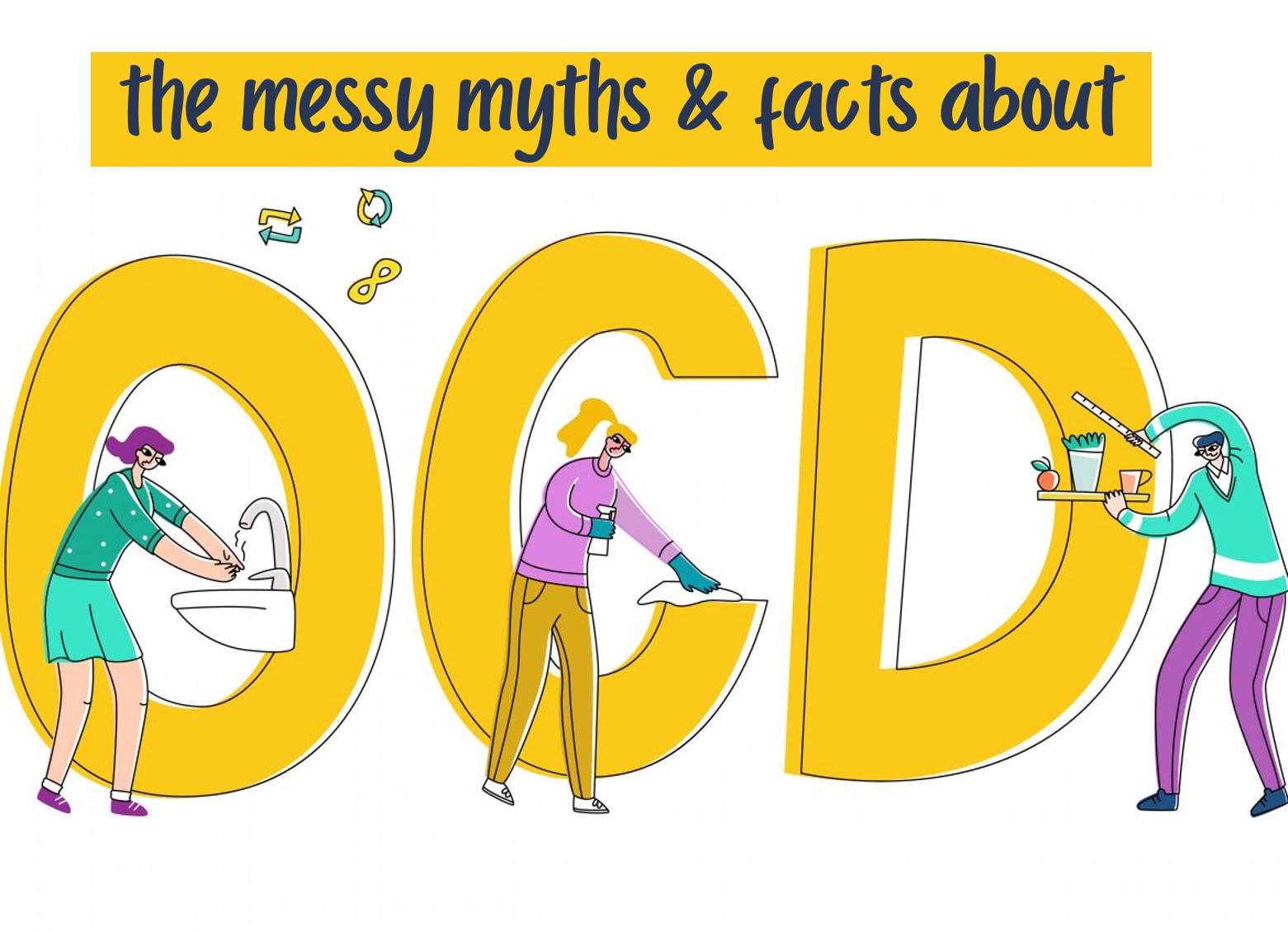
“I need to organize my planner. I’m so OCD.” “My room is perfect. I’m so OCD.” “I color-code everything. I’m so OCD.”
Sound familiar? OCD (Obsessive Compulsive Disorder) is one of the most misunderstood mental health conditions. Many believe OCD is just about being neat or organized—but the reality is far more complex. Let’s debunk 7 common myths with real facts.
Myth 1: All Neat Freaks Have OCD
Fact: Cleaning is just one of many OCD-related compulsions.
Many people with OCD have contamination fears, leading to compulsive hand-washing or excessive cleaning. However, not all people with OCD have cleanliness obsessions—some can even be messy.
Often, a desire for cleanliness is simply a personality trait or stress management technique, not OCD.
Other common compulsions include hoarding, checking and rechecking, fearing catastrophic events, and repeating routines like going through doorways multiple times.
Myth 2: OCD Is a Mental Superpower That Can Make You Brilliant
Fact: OCD is not a superpower. It causes racing and uncontrolled thoughts.
This misconception often comes from movies. While some people with OCD may focus intensely on details, this stems from the anxiety disorder driving OCD—not from any advantage.
OCD involves intrusive, distressing thoughts and repetitive behaviors that interfere with daily life. It’s a challenging condition, not a superpower.
Myth 3: People with OCD Will Have the Same Compulsive Behavior Their Entire Life
Fact: OCD symptoms can change over time.
Both obsessions and compulsions can evolve throughout life. Age, culture, and experiences affect symptoms.
For example, a 12-year-old may fear losing parents. By 28, the same person may fear losing their spouse. The specific worry changes, but the underlying fear remains.
Myth 4: Bad Parenting Causes OCD
Fact: Bad parenting is rarely the cause. A complex interaction of factors causes OCD.
Parenting—even imperfect parenting—doesn’t cause OCD. Blaming parents can harm treatment by creating guilt.
OCD is complex, involving genetics, brain chemistry, and environmental factors. While trauma and neglect can contribute, parenting style alone doesn’t cause OCD.
Myth 5: OCD Is a Woman’s Disease
Fact: OCD affects both genders at the same rate.
According to the International OCD Foundation, OCD affects men, women, and children of all ethnic, racial, and economic backgrounds equally.
Myth 6: People with OCD Are Picky and Controlling
Fact: OCD is a mental health condition, not a personality trait.
People with OCD have diverse personalities. Some may be controlling with others, while others are easy-going around people and strict only with themselves. OCD behaviors are driven by anxiety and intrusive thoughts, not personality.
Myth 7: OCD Is Not Treatable
Fact: OCD is very treatable.
While OCD won’t improve on its own, many effective treatments exist. Unfortunately, many don’t seek help due to embarrassment or not realizing mental health support is available.
Effective treatments include:
- Psychotherapy: Particularly Cognitive Behavioral Therapy (CBT)
- Exposure and Response Prevention (ERP): The first-line treatment
- Medication: Anti-anxiety medications or antidepressants
- Group therapy: Connecting with others reduces isolation
A mental health professional can create a personalized treatment plan.
Think You Have OCD?
You cannot accurately diagnose OCD through internet research. Only a mental health specialist can determine whether your symptoms represent OCD or another condition.
Looking for a psychiatrist in Ahmedabad? Drop us a message or give us a call for an appointment at Parth Hospital.
Frequently Asked Questions
What are the biggest misconceptions people have about OCD?
The biggest misconceptions are that OCD is just about being neat, that it’s a personality quirk rather than a serious mental health condition, and that people can simply “stop” their behaviors. In reality, OCD involves distressing intrusive thoughts and time-consuming rituals that significantly impair daily functioning.
Why do people confuse OCD with being tidy or organized?
This confusion comes from casual misuse of the term in everyday language and media portrayals. While contamination fears and cleaning rituals are one type of OCD, many people with OCD don’t have cleanliness concerns. The condition encompasses a wide range of obsessions and compulsions beyond organization.
What is the difference between OCD and perfectionism?
Perfectionism is a personality trait involving high standards. OCD is a clinical disorder involving intrusive, unwanted thoughts (obsessions) causing severe anxiety, and repetitive behaviors (compulsions) performed to reduce that anxiety. People with OCD feel compelled to perform rituals—they’re not choosing to be “perfect.”
Are OCD symptoms the same for everyone?
No, OCD symptoms vary widely and can change over time. Common themes include contamination fears, harm obsessions, symmetry compulsions, intrusive thoughts, and checking behaviors. Each person experiences a unique combination and severity of symptoms.
What is the most effective treatment for OCD?
Exposure and Response Prevention (ERP), a type of Cognitive Behavioral Therapy, is the gold standard. It involves gradually exposing patients to anxiety-triggering situations while preventing compulsive responses. Medication (typically SSRIs) combined with ERP often produces the best results.
Related Resources:
- Understanding Anxiety Disorders
- Warning Signs Your Mental Health May Be Declining
- Understanding Toxic Stress
- Psychotherapy and Counselling Services
- General Psychiatry Services
Source: Banner Image Source: www.freepik.com