




- Home
- >
- Neuro-Stimulation Treatments
Advanced Evidence-Based Treatments
Mental health treatment depends on therapy and infrastructure. At Parth Hospital, we offer advanced neuro-stimulation treatments for complex, severe, and treatment-resistant conditions—delivered carefully, ethically, and responsibly by expert teams.
Advanced psychiatric treatments require more than prescriptions. They demand





Across Gujarat, only a limited number of psychiatric hospitals are equipped with the infrastructure and clinical depth required to safely deliver advanced treatments such as neurostimulation and long-acting formulations.
Parth Hospital is structured to meet these requirements.

Neurostimulation treatments act directly on specific brain circuits involved in psychiatric illness. They are considered when symptoms:
- Remain severe despite adequate medication trials
- Plateau over time
- Require faster or more sustained symptom control
At Parth Hospital, neurostimulation is delivered within a controlled medical environment, supported by anaesthesia services, monitoring systems, and trained clinical staff.
Electroconvulsive Therapy (ECT)
ECT is one of the most effective treatments for severe and treatment-resistant psychiatric conditions.
Our ECT services are supported by:
Dedicated ECT Suites
Modern Anesthesia and Monitoring Equipment
Experienced Psychiatric and Anaesthetic Teams
Strict Safety and Consent Protocols
ECT may be recommended in conditions such as:
Severe Major Depressive Disorder (MDD) with suicidal risk
Catatonia
Acute Psychosis
Treatment-Resistant Mood Disorders
outdated or stigmatised portrayals.
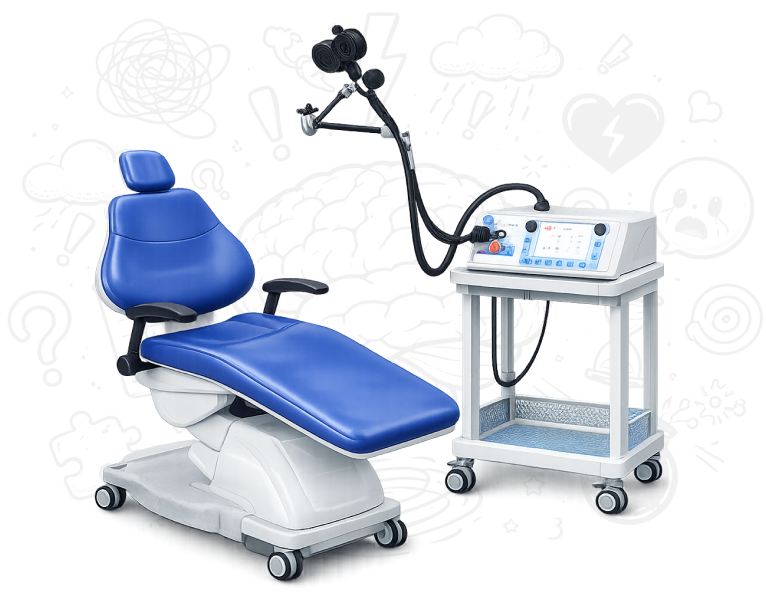
TMS is a non-invasive neurostimulation treatment that uses
magnetic pulses to modulate brain activity.
Parth Hospital offers both:

rTMS

Deep TMS
This level of TMS capability is not widely available across psychiatric hospitals in
Gujarat and requires specialised equipment and trained operators.
TMS May Be Considered For:
Key Advantages of TMS Include:




Long-Acting Injectable Medications (LAIs)
Long-Acting Injectables (LAIs) are pharmacological treatments designed to provide sustained medication delivery over weeks or months.
They are particularly useful when
Medication Adherence Is Inconsistent
Relapse Prevention Is a Priority
Relapse Prevention Is a Priority
LAIs are commonly used in
Schizophrenia
Schizoaffective Disorder
Bipolar Disorder (Selected Cases)
At Parth Hospital, LAIs are administered as part of a structured treatment plan, with careful monitoring and follow-up to ensure safety and effectiveness.
Advanced treatments at Parth Hospital are never used in isolation.
They are integrated with:



This integrated approach allows us to manage complex and long-standing psychiatric illnesses with continuity and accountability.
All treatments offered at Parth Hospital are guided by:

All treatments offered at Parth Hospital are guided by:
- Evidence-based clinical guidelines
- Careful patient selection
- Transparent discussions with patients and caregivers
- Informed consent at every stage
- Thorough pre-treatment assessment and evaluation
- Regular monitoring throughout the treatment process
- Personalized treatment protocols tailored to individual needs
- Collaborative decision-making with patients and families
Our focus is not on offering every treatment to every patient, but on offering
the right treatment, in the right setting, at the right time.
Not every patient requires advanced treatments such as neurostimulation or injectables.
A detailed psychiatric evaluation helps determine:

treatments are sufficient

appropriate

is best suited
Treatment decisions are always individualised and clinically driven.
FAQs
Why does treatment infrastructure matter for advanced psychiatric treatments?
Advanced psychiatric treatments require more than prescriptions—they demand purpose-built medical spaces, trained multidisciplinary teams, strict safety and monitoring protocols, emergency readiness, and experience with high-acuity cases. Treatments like ECT require dedicated suites, modern anesthesia and monitoring equipment, and experienced psychiatric and anesthetic teams. Only a limited number of psychiatric hospitals across Gujarat are equipped with the infrastructure and clinical depth to safely deliver these treatments, which is why Parth Hospital has invested in this specialized infrastructure.
When are neurostimulation treatments like ECT or TMS recommended?
Neurostimulation treatments are considered when symptoms remain severe despite adequate medication trials, plateau over time without further improvement, or require faster or more sustained symptom control. ECT may be recommended for severe depression with suicidal risk, catatonia, acute psychosis, or treatment-resistant mood disorders. TMS (including rTMS and Deep TMS) may be considered for depression not responding adequately to medications and selected mood and anxiety disorders. These are not first-line treatments but important options for specific clinical situations.
What's the difference between regular TMS and Deep TMS?
Both rTMS and Deep TMS use magnetic pulses to modulate brain activity in a non-invasive way, but they differ in their depth of penetration and targeted brain areas. Parth Hospital offers both types of TMS technology, which is not widely available across psychiatric hospitals in Gujarat and requires specialized equipment and trained operators. Both require no anesthesia, can be delivered on an outpatient basis, and cause minimal disruption to daily activities. Your psychiatrist will determine which type is most appropriate based on your specific condition.
Are advanced treatments like ECT and TMS used alone or with other therapies?
Advanced treatments at Parth Hospital are never used in isolation. They are integrated with psychiatric consultations (OPD), inpatient care (IPD) when required, psychotherapy and counseling, and long-term follow-up planning. This integrated approach allows us to manage complex and long-standing psychiatric illnesses with continuity and accountability. The focus is on comprehensive care that addresses all aspects of mental health, not just one treatment modality.
How do I know if I need advanced psychiatric treatments?
Not every patient requires advanced treatments such as neurostimulation or long-acting injectables. A detailed psychiatric evaluation helps determine whether standard treatments are sufficient, when escalation is appropriate, and which advanced option is best suited to your situation. Treatment decisions are always individualized and clinically driven, guided by evidence-based guidelines, careful patient selection, and transparent discussions with patients and caregivers. The focus is on offering the right treatment, in the right setting, at the right time—not offering every treatment to every patient.