


Introduction
A correct diagnosis is the foundation of effective treatment. In psychiatry, however, diagnosis can be complex. Unlike conditions such as diabetes or hypertension, there is no single blood test that can confirm depression, bipolar disorder, or schizophrenia. This uncertainty often leaves families anxious—“What if it’s a misdiagnosis?” At Parth Hospital Ahmedabad, we recognize these concerns and approach psychiatric diagnosis with scientific rigor, empathy, and comprehensive evaluation.
Why Accurate Diagnosis Matters
The difference between recovery and relapse often lies in the accuracy of diagnosis. A patient with bipolar disorder misdiagnosed as having depression may be prescribed antidepressants alone, which could worsen mania. Similarly, untreated psychosis can delay recovery and increase long-term disability. Accurate diagnosis ensures timely, targeted treatment and builds the patient’s trust in their care team.
The Diagnostic Process at Parth Hospital
We follow a multistep evaluation model that combines clinical expertise with advanced tools. Each step is designed to reduce error and capture the full picture of the patient’s mental health.
Step 1: Comprehensive Clinical Interview
The first step is a detailed conversation with the patient. Our psychiatrists listen not only to symptoms but also to life history, stressors, family background, and personality traits. This holistic view provides context beyond the checklist of symptoms.
Step 2: Collateral Information
Because psychiatric symptoms may be underreported or denied by patients, input from family members is invaluable. Families often describe behavioral changes, sleep patterns, or subtle warning signs that patients overlook.
Step 3: Standardized Rating Scales
We use internationally validated scales like the Hamilton Depression Rating Scale (HAM-D), Young Mania Rating Scale (YMRS), and PANSS for schizophrenia. These tools provide objective benchmarks and help track progress over time.
Role of Investigations
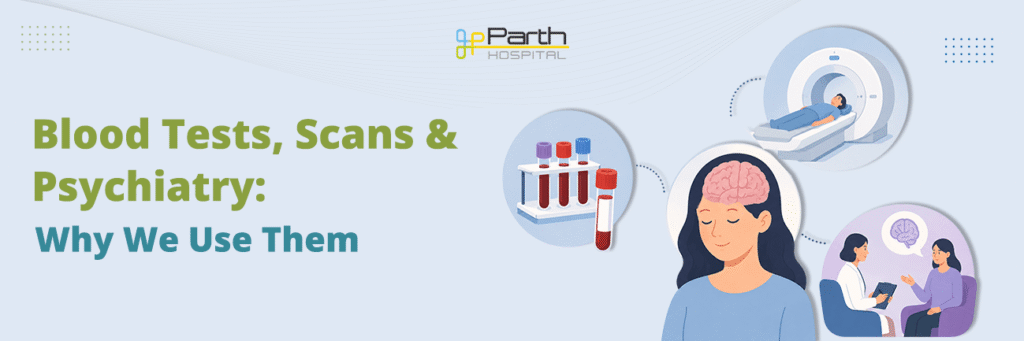
Although psychiatry is often viewed as “diagnosis by talking,” we also integrate laboratory and imaging studies when necessary.
- Blood Tests: To rule out thyroid dysfunction, vitamin deficiencies, or infections that can mimic psychiatric symptoms.
- Neuroimaging: MRI or CT scans if neurological conditions are suspected.
- EEG: In cases of seizures or catatonia.
- Toxicology Screens: To rule out substance-induced psychiatric states.
These investigations help ensure the illness is psychiatric and not secondary to another medical condition.
How We Avoid Common Pitfalls
| Common Pitfall | Our Safeguard |
|---|---|
| Symptom Overlap (e.g., depression vs bipolar) | Longitudinal assessment and mood charting |
| Cultural Misinterpretation | Culturally sensitive clinicians who speak Gujarati, Hindi, and English |
| Over-reliance on medication history | Fresh evaluation regardless of past prescriptions |
| Ignoring physical illness | Mandatory medical screening before psychiatric labeling |
| Single-opinion diagnosis | Team-based case discussions |
This multi-angled approach significantly reduces misdiagnosis.
Case Illustration
A 26-year-old man was referred to us with “treatment-resistant depression.” Despite years of antidepressants, he had repeated relapses. Our detailed evaluation revealed undiagnosed bipolar II disorder—his “good periods” were actually hypomanic episodes. With the correct diagnosis and mood stabilizer therapy, he achieved sustained stability. His family later said, “It was like finally solving a puzzle that had haunted us for years.”
The Human Side of Diagnosis
Beyond science, diagnosis also requires empathy and sensitivity. Many patients fear labels like “schizophrenia” or “bipolar.” At Parth Hospital, we explain conditions using accessible language, avoiding stigmatizing terms. We focus on strengths, recovery potential, and support systems, not just deficits. This human-centered communication helps families accept and engage with treatment.
Conclusion
Accurate psychiatric diagnosis is both a science and an art. At Parth Hospital Ahmedabad, we combine clinical expertise, standardized tools, laboratory support, and family input to make the most precise diagnosis possible. For patients and families, this means not just receiving a label but beginning a pathway to healing, clarity, and hope.
The message is simple: when diagnosis is careful and accurate, treatment becomes effective, and recovery becomes possible.