




- Home
- >
- Anxiety Disorders
Anxiety: When Normal Stress Becomes a Disorder
Anxiety is characterised by a feeling of nervousness, involving fear or anxiety. It is a normal reaction to stress and is a protective mechanism for the body. When it becomes excessive and out of control, it is diagnosed as an illness.
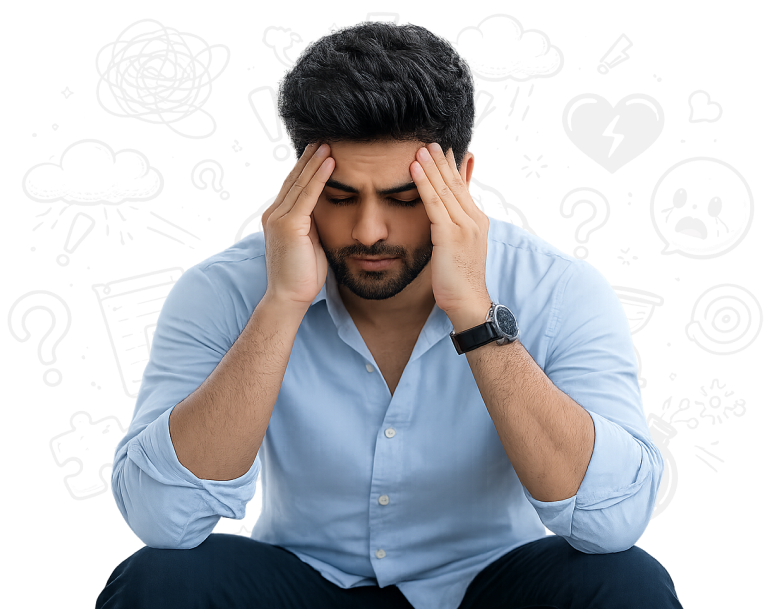
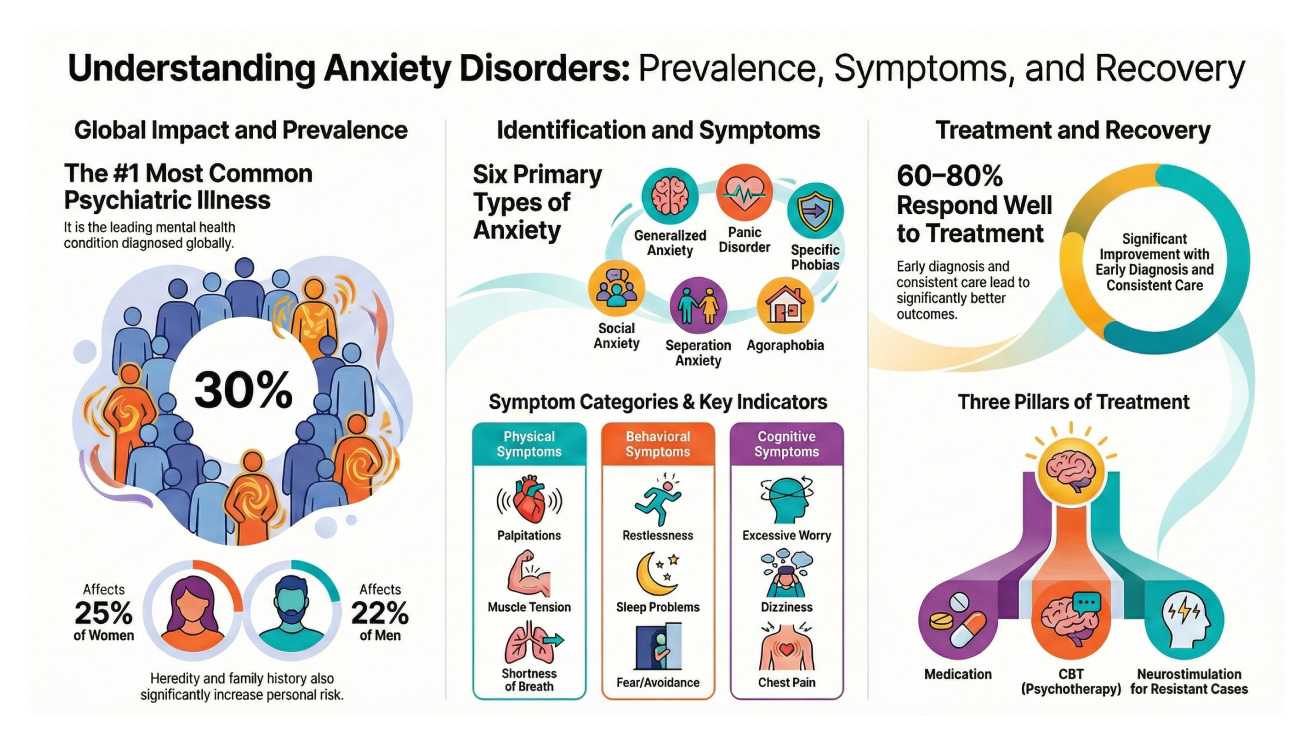
It is the most common presentation of Mental Illness in People Globally.
Up to 30% Individuals across their entire life span.
19% of the total population suffers from Anxiety Disorders (44.9 Million)
Women are more likely than men to experience anxiety disorders (26% Females and 22% Males)
Hereditary plays an important role
Can affect functional outcomes severely.
Discover what anxiety disorders look like, how they affect the mind and body, and what you can do about them. This illustrated guide provides clear insights into diagnosis, management, and recovery pathways.
Understanding the Condition

- Excessive and disproportionate worries regarding trivial issues.
- Unable to control the worrisome thoughts
- Significant effect on routine activities, leading to reduction in productivity
- Multiple physical symptoms such as restlessness, feeling edgy, being easily fatigued, exhausted all the time, difficulty in eating and sleeping.
- Difficulty concentrating or mind going blank
- Irritability and feeling on edge
- Sleep disturbances including trouble falling asleep, staying asleep, or restless sleep
- Headaches, stomachaches, or unexplained pains
Exploring Related Conditions
Palpitations, Pounding Heart or Rapid Heart Rate
Shortness of Breath or Smothering
Feeling of Choking
Nausea or Abdominal Pains
Sweating
Chest Pain
Numbness or Tingling
Fear of Losing Control
Trembling or Shaking
Feeling Dizzy, Light-Headed or Faint
Chills or Hot Flashes
Fear of Dying
Because symptoms are so severe, many people who experience a panic attack may believe they are having a heart attack or other life-threatening illness and may go to a hospital ER.
Usually linked with stressful event: can occur independent of that also
Starts slowly, peaks in intensity within a few minutes and lasts for 15-30 minutes
Self-resolving, although sometimes patients may need the help of pharmacological agents to terminate them.
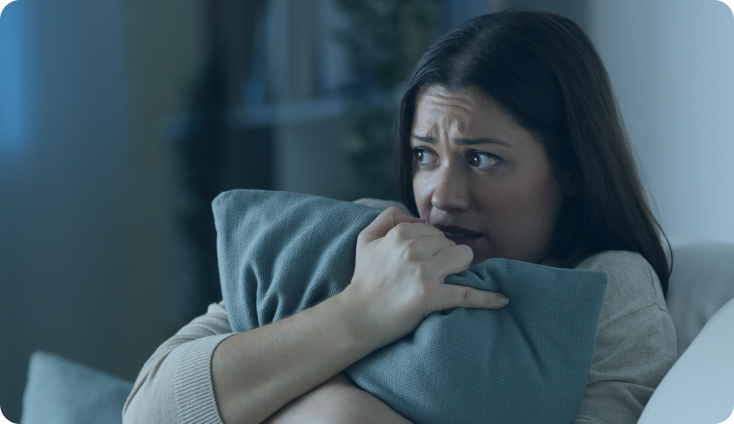
Phobias, Specific Phobia
A specific phobia is excessive and persistent fear of a specific object, situation or activity that is generally not harmful. Patients know their fear is excessive, but they can’t overcome it.
These fears cause such distress that some people go to extreme lengths to avoid what they fear. Examples are fear of flying or fear of spiders.
Separation Anxiety Disorder
A person with separation anxiety disorder is excessively fearful or anxious about separation from those with whom he or she is attached.
The feeling is beyond what is appropriate for the person’s age, persists (at least four weeks in children and six months in adults) and causes problems functioning.
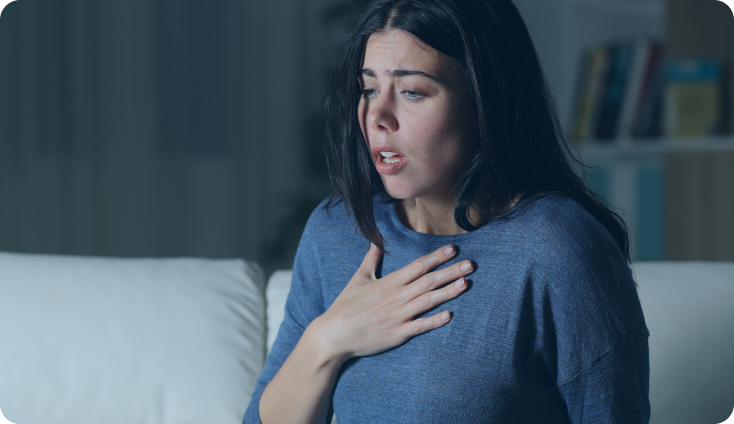

Social Anxiety Disorder
- People with this disorder will try to avoid the situation or endure it with great anxiety.
- Common examples are extreme fear of public speaking, meeting new people or eating/drinking in public.
Agoraphobia

Diagnosis uses clinical signs/symptoms. Blood tests check for hypothyroidism causing MDD. Severity assessed via structured scales like Hamilton Depression Rating Scale.
Anxiety Disorders is among the most treatable of mental disorders.
Between 80 percent and 90 percent of people with anxiety eventually respond well to treatment. Most, if not all, patients gain significant relief from their symptoms with treatment.
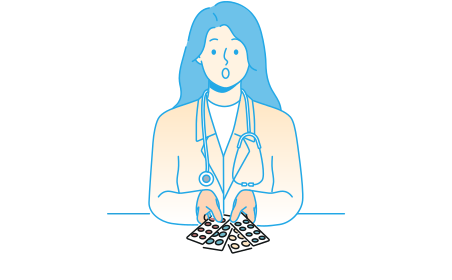
Imbalances in neurotransmitters like Serotonin, Norepinephrine, and Dopamine cause anxiety. Antidepressants restore brain function by increasing these levels. Benefits typically appear after 15-21 days of treatment.
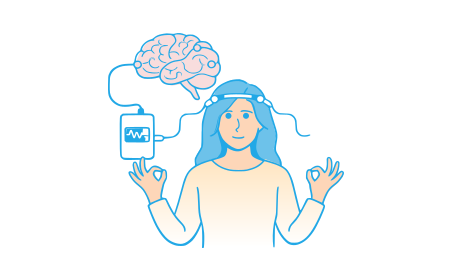
Newer MDD treatments include neurostimulation techniques for faster recovery. Used for severe cases or when medications fail. See our Neurostimulation page for details.
Please refer to our dedicated page for more information.
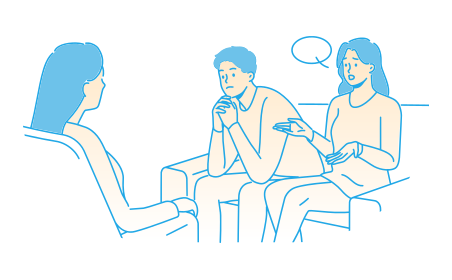
Psychotherapy and counseling are vital for treating Major Depressive Disorder (MDD), especially with exogenous triggers. Visit our dedicated page for more information.
Please refer to our dedicated page for more information.
Discover what anxiety disorders look like, how they affect the mind and body, and what you can do about them. This illustrated guide provides clear insights into diagnosis, management, and recovery pathways.