




- Home
- >
- Bipolar Disorder
Understanding Bipolar Disorder: Beyond Mood Episodes
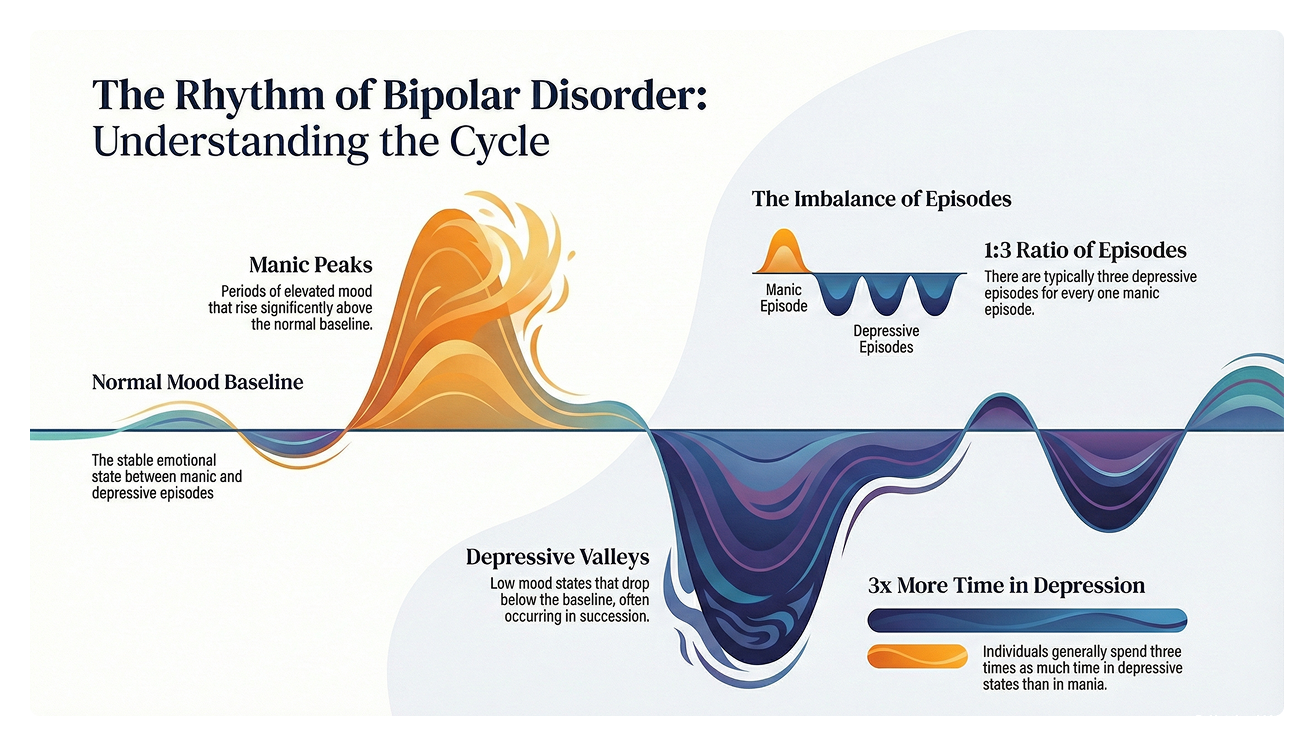
Bipolar disorder (also called manic-depressive illness) is a mental health condition marked by extreme mood swings that go beyond normal ups and downs. These shifts in mood, energy, and activity levels can be intense and unpredictable, significantly affecting daily life, relationships, and work.

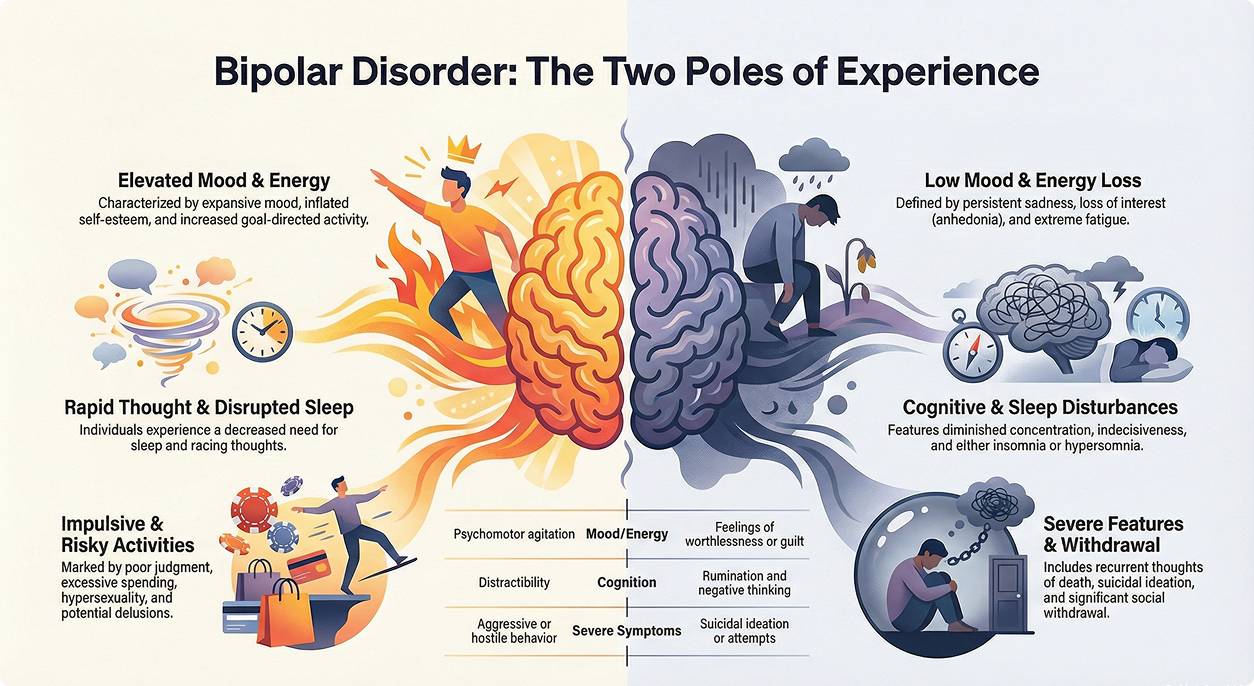
Extreme mood swings between manic highs and depressive lows
Manic episodes cause increased energy and impulsive behavior
Depressive episodes lead to persistent sadness and hopelessness
Affects approximately 2.8% of adults in the population
Episodes can last days to months if untreated
Most often begins in late adolescence or early adulthood
Discover what bipolar disorder looks like, how it affects the mind and body, and what you can do about it. This illustrated guide provides clear insights into diagnosis, management, and recovery pathways.
Understanding the Condition

- Alternating episodes of mania and depression disrupting daily life
- Manic episodes cause unusual energy, euphoria, and impulsive behavior
- Depressive episodes involve sadness, fatigue, and loss of interest in daily activities
- Three main types — Bipolar I, Bipolar II, and Cyclothymia — varying in severity
- Caused by a combination of genetics, brain chemistry, and environmental triggers
- Manageable with proper medication and therapy for a stable life
- Early diagnosis helps prevent severe mood episodes and complications
- Sleep disruption and stress are common triggers for mood shifts
- Relationships and work performance are often affected during episodes
- Lifelong condition but symptoms reduce significantly with consistent treatment
Exploring Related Conditions
Bipolar I Severe manic episodes
Bipolar II Hypomania & depression
Cyclothymia Mild mood fluctuations
Rapid Cycling 4+ mood episodes yearly
Mixed Episodes Mania & depression together
Seasonal Bipolar Season-triggered moods
With Psychosis Hallucinations present
Substance-Induced Drug/alcohol triggered
Early Onset Starts in childhood
Schizoaffective Disorder Mood & psychotic symptoms
Borderline Personality Disorder Intense mood swings
Postpartum Post-childbirth triggered



- Symptoms are milder than full bipolar episodes but persistent
- Common examples are irritability, emotional highs and lows, and difficulty maintaining relationships


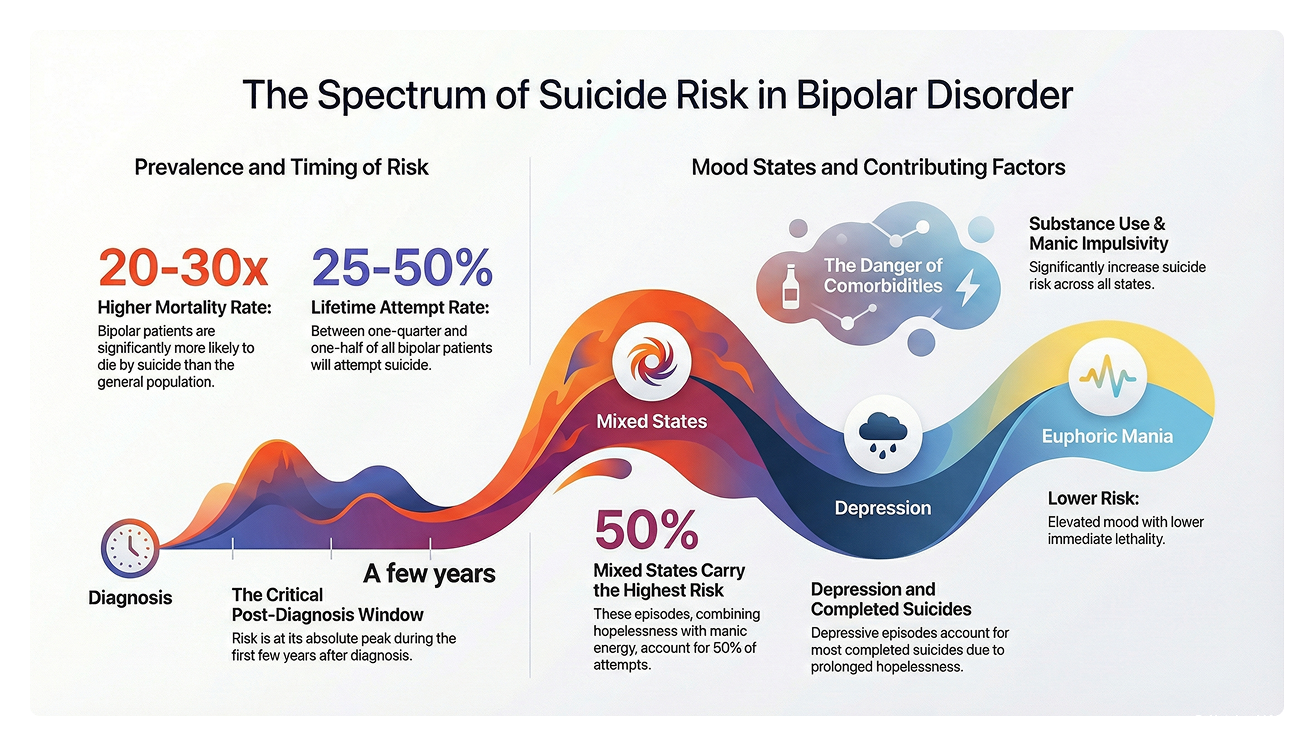
Mixed features occur when symptoms of both mania and depression are present at the same time. A person may feel energized yet hopeless, making it one of the most difficult episodes to manage.
Bipolar disorder is diagnosed through clinical evaluation of mood patterns and behavior. Structured tools like the Mood Disorder Questionnaire (MDQ) help assess severity and guide effective treatment planning.
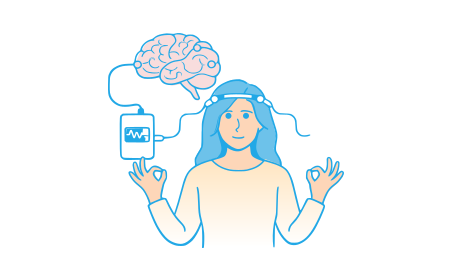
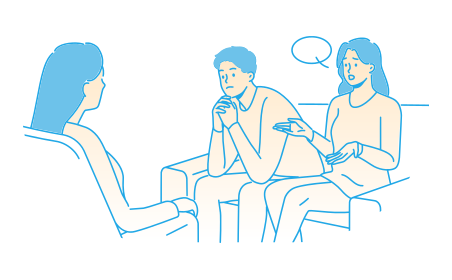
Discover what bipolar disorder looks like, how it affects the mind and body, and what you can do about it. This illustrated guide provides clear insights into diagnosis, management, and recovery pathways.