



Introduction
Schizophrenia is a complex psychiatric condition that affects thinking, emotions, and daily functioning. It can disrupt entire families, reshaping roles and relationships. Among these, the role of daughters is often profound—they may become caregivers, advocates, and emotional anchors. At Parth Hospital Ahmedabad, we have witnessed how daughters’ involvement can significantly improve recovery journeys. This article highlights both the challenges and strengths of this unique role, weaving together empathy, science, and lived experience.
The Unique Position of Daughters
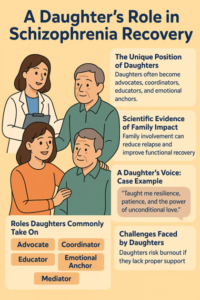
In many Indian families, daughters are deeply connected to the emotional pulse of the household. Even when they marry or move away, they often remain central to caregiving. When a parent or sibling develops schizophrenia, daughters frequently step into roles of advocate, educator, and support system.
From arranging appointments to encouraging medication adherence, from managing stigma in the community to being the patient’s confidante, daughters provide a bridge between medical treatment and family life.
Scientific Evidence of Family Impact
Research confirms what families already know: involvement of close relatives reduces relapse, improves medication adherence, and enhances functional recovery. Family interventions—especially when daughters are actively engaged—can cut relapse rates by nearly 50%. Emotional warmth, practical support, and informed advocacy make measurable differences in long-term outcomes.
Yet, science also warns of “expressed emotion,” where criticism, over-involvement, or hostility can worsen symptoms. This is why structured guidance is essential.
A Daughter’s Voice: Case Example
Take the story of Riya (name changed), whose father was diagnosed with schizophrenia when she was in college. At first, she struggled with embarrassment and anger. Why was her father shouting at strangers or skipping work? But through psychoeducation sessions at Parth Hospital, Riya learned these were symptoms of illness, not personality flaws.
Over time, she became her father’s strongest ally—reminding him of medications, attending therapy sessions, and explaining his condition to extended family. Today, her father is stable, and Riya describes the journey as one that “taught me resilience, patience, and the power of unconditional love.”
Roles Daughters Commonly Take On
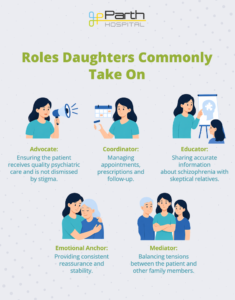
- Advocate: Ensuring the patient receives quality psychiatric care and is not dismissed by stigma.
- Coordinator: Managing appointments, prescriptions, and follow-up.
- Educator: Sharing accurate information about schizophrenia with skeptical relatives.
- Emotional Anchor: Providing consistent reassurance and stability.
- Mediator: Balancing tensions between the patient and other family members.
These roles are often invisible but invaluable in sustaining recovery.
Challenges Faced by Daughters
While daughters bring immense strength, they also face unique challenges. Caregiving can cause emotional fatigue, especially if they juggle careers, marriages, or parenting. In traditional settings, daughters may feel pressure to conceal illness to protect family reputation, leading to isolation. Guilt, resentment, or fear of genetic risk may also weigh heavily. Without proper support, daughters risk burnout.
That is why at Parth Hospital, we provide family therapy, support groups, and counseling not only for patients but also for caregivers like daughters.
How Parth Hospital Supports Daughters
| Support Offered | Impact on Daughters |
|---|---|
| Psychoeducation | Builds understanding, reduces guilt, and empowers advocacy. |
| Family Therapy | Improves communication, resolves conflict, and sets boundaries. |
| Support Groups | Provides shared experiences and emotional relief. |
| Caregiver Counseling | Prevents burnout and promotes self-care. |
| Flexible Involvement | Respects daughters’ own lives and commitments. |
These structured supports ensure daughters can care without losing themselves in the process.
Balancing Care and Self-Care
A vital part of sustaining the role is teaching daughters that their well-being matters too. Encouraging breaks, pursuing hobbies, and maintaining social connections are not selfish—they are protective. We remind families that a burned-out caregiver cannot provide effective care, and that investing in daughters’ mental health ultimately strengthens the entire system of recovery.
Frequently Asked Questions
Do daughters have to be the main caregivers?
Not necessarily. The caregiving role can be shared among family members, but daughters often choose or are expected to step in.
What if a daughter lives far away?
Technology allows remote support—video calls for therapy sessions, reminders, and emotional check-ins.
Can caregiving affect a daughter’s own mental health?
Yes, but with guidance and support, daughters can balance their own needs while contributing meaningfully.
How can daughters manage stigma?
By staying informed, educating relatives, and remembering that stigma is society’s problem, not the patient’s fault.
Conclusion
The journey of schizophrenia recovery is long and complex, but daughters often become quiet heroes in this process. Their ability to combine empathy with action can stabilize families and transform outcomes. At Parth Hospital Ahmedabad, we honor the daughters who shoulder this responsibility with courage and provide them with the tools they need to thrive.
The message is clear: when daughters are supported, patients recover stronger, and families heal together.