



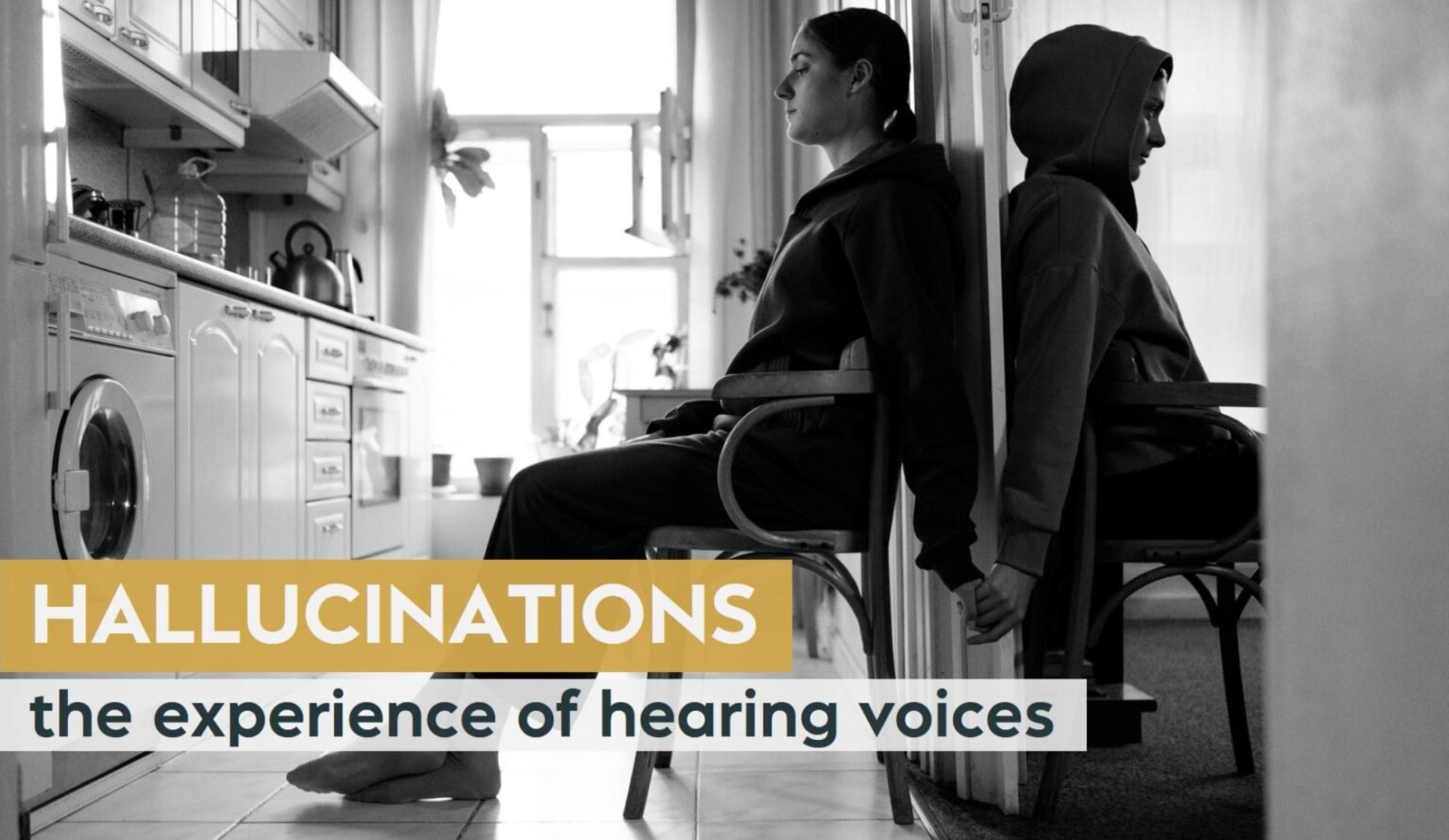
Have you ever heard someone say they’re “hearing voices” or seeing things that aren’t there? These experiences are called hallucinations, and while often associated with mental health conditions like schizophrenia, they can have various causes.
This blog is part of our series to develop a detailed understanding of schizophrenia and its symptoms.
What Are Hallucinations? The Experience of Hearing Voices in Schizophrenia
Hallucinations are sensory experiences that seem real but are created by your mind. A person perceives something—seeing, hearing, feeling, smelling, or tasting—that isn’t actually present.
Understanding the difference:
- Hallucinations: Perceiving something that doesn’t exist (hearing voices when no one speaks)
- Illusions: Misinterpreting something real (mistaking a coat for a person)
- Imagination: Consciously creating mental images you know aren’t real
Hallucinations can affect all five senses, making them particularly challenging.
What Causes Hallucinations?
Mental Health Conditions:
- Schizophrenia and psychotic disorders
- Severe depression or bipolar disorder
- Post-Traumatic Stress Disorder (PTSD)
- Severe anxiety (rare)
Medical Conditions:
- Brain tumors, neurological disorders, dementia
- High fever, infections, Parkinson’s disease
Substance-Related:
- Drug/alcohol use or withdrawal
- Medication side effects, sleep deprivation
Types of Hallucinations
| Type | Sense | Example |
|---|---|---|
| Auditory | Hearing | Voices, music, sounds |
| Visual | Sight | Seeing people, objects, lights |
| Olfactory | Smell | Smelling odors without source |
| Gustatory | Taste | Tasting without eating |
| Tactile | Touch | Feeling sensations on skin |
Hallucinations in Schizophrenia
Schizophrenia is characterized by hallucinations, which represent a “positive symptom”—a gain of function, or new experiences that didn’t previously exist.
Auditory Hallucinations – Hearing Voices
Auditory hallucinations are the most common type in schizophrenia. Patients hear voices that:
- Speak directly to them
- Have conversations among themselves
- Command them to do things
- Comment on their actions
Key characteristics:
- Only the patient can hear these voices
- Voices appear to converse with the patient
- They feel completely real to the patient
- Voices become more aggressive and personal over time
- Can become commanding, potentially threatening harm
Why do they feel “real”?
Patients aren’t imagining these voices—they actually perceive the sounds. It’s not thoughts they can control. The voices represent illness manifestation requiring medical treatment.
Visual and Other Hallucinations
While less common, visual hallucinations can occur in schizophrenia. Patients may see people, shadows, or objects that aren’t present. Tactile, olfactory, and gustatory hallucinations are rarer but possible.
Key understanding: These experiences are not imaginary. Patients genuinely perceive them, but they’re created by illness, not external reality.
Treatment for Hallucinations
Antipsychotic Medication: The primary treatment involves antipsychotic medications that regulate brain chemistry and reduce or eliminate hallucinations.
- Cognitive Behavioral Therapy (CBT) helps patients cope
- Family therapy educates caregivers
- Support groups provide connection
Early diagnosis significantly improves outcomes. If you or a loved one experiences hallucinations or warning signs of mental health decline, seek professional help immediately.
Key Points
- Hallucinations are experiencing something not real but perceived as real
- Most common in schizophrenia is auditory—hearing voices
- These voices are not real, but the experience is real to the patient
- Patients cannot control these voices—they respond only to treatment
- Voices often increase and become commanding over time
- Hallucinations represent illness-driven experiences, not imagination
- Treatment is available and effective
Looking for a psychiatrist in Ahmedabad? Contact Parth Hospital for an appointment.
Frequently Asked Questions
What are hallucinations in simple words?
Hallucinations are sensory experiences that feel real but aren’t actually happening. You might see, hear, smell, taste, or feel something that doesn’t exist. Unlike imagination where you know something isn’t real, hallucinations seem genuine.
What are hallucinations in psychology?
In psychology, hallucinations are perception-like experiences occurring without external stimulus. They’re symptoms of various mental health conditions and are studied as disruptions in sensory processing and brain function, distinct from illusions or delusions.
What causes visual hallucinations?
Visual hallucinations can be caused by neurological conditions (Parkinson’s, dementia), mental health disorders (schizophrenia, severe depression), substance use/withdrawal, medications, migraines, sleep deprivation, or eye diseases. Medical evaluation is essential.
Are hallucinations always linked to schizophrenia?
No. Hallucinations occur in many conditions including Parkinson’s, dementia, severe depression, PTSD, brain injuries, high fevers, and substance use. While common in schizophrenia, hallucinations alone don’t indicate this diagnosis.
Can stress or anxiety cause hallucinations?
Severe stress and anxiety can occasionally cause brief hallucinations, particularly with prolonged sleep deprivation or trauma. However, this is rare. Seek professional evaluation if experiencing hallucinations alongside anxiety.
Do hallucinations go away with treatment?
Yes, most hallucinations respond well to treatment. Antipsychotic medications are highly effective for psychotic disorders. Combined with therapy, many patients experience significant reduction or elimination of hallucinations. Early treatment leads to better outcomes.
Related Resources:
- Understanding Post-Traumatic Stress Disorder (PTSD)
- Clinical Depression: What It Means
- Understanding Anxiety Disorders
- Warning Signs Your Mental Health May Be Declining
- General Psychiatry Services
- Psychotherapy and Counselling Services
Source: Banner: Image by www.pexels.com