


Introduction
One of the most painful experiences for families is watching a loved one suffer from a psychiatric illness while refusing treatment. Resistance can arise from denial, fear, stigma, or past negative experiences. At Parth Hospital Ahmedabad, we often meet families who say, “We know help is needed, but they won’t listen.” Supporting a resistant patient requires patience, strategy, and compassion. This article explains why resistance happens and how families can respond constructively.
Why Patients Resist Treatment
Resistance does not mean the patient is stubborn or careless. It usually reflects deeper challenges such as lack of insight (a condition called anosognosia, common in schizophrenia and bipolar disorder), fear of side effects, cultural stigma, or previous bad experiences with doctors or medications. For some, symptoms like paranoia make them distrustful of professionals. Understanding these underlying reasons helps families respond with empathy rather than frustration.
Common Triggers of Resistance
- Denial of illness: “I’m fine, I don’t need help.”
- Fear of stigma: Worry about what neighbors or colleagues will think.
- Side effect concerns: Fear that medication will change their personality.
- Loss of autonomy: Feeling controlled by doctors or family.
- Hopelessness: Believing treatment won’t work because nothing has helped before.
Recognizing these triggers helps families avoid confrontations that worsen resistance.
Strategies That Work
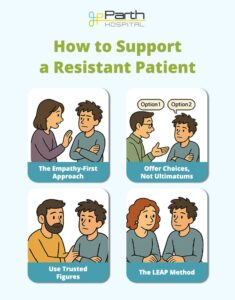
At Parth Hospital, we encourage families to approach resistance as a gentle negotiation rather than a battle.
The Empathy-First Approach
Instead of insisting, families should listen. Phrases like “I hear that you’re scared about medication” or “I understand you don’t feel unwell, but we’re worried because we love you” open doors. Respectful communication fosters trust, making patients more likely to engage.
Offer Choices, Not Ultimatums
When patients feel trapped, they push back. Offering options—like outpatient therapy before hospitalization, or exploring psychotherapy alongside medication—helps them feel respected.
Use Trusted Figures
Sometimes patients respond better to someone outside the immediate family. Involving a trusted friend, community leader, or another relative can reduce tension.
A Practical Framework: The LEAP Method
One evidence-based approach we use is the LEAP method – Listen, Empathize, Agree, Partner.
- Listen: Give full attention to their perspective without interruption.
- Empathize: Validate their fears and feelings, even if you disagree.
- Agree: Find common ground, such as wanting them to sleep better or feel calmer.
- Partner: Collaborate on next steps, whether it’s one therapy session or a trial of medication.
This method shifts the dynamic from confrontation to cooperation.
When Safety Is at Risk
In some cases, resistance can put patients or others in danger—for example, when someone is suicidal, severely psychotic, or violent. In such situations, involuntary admission may be necessary under the Mental Healthcare Act. At Parth Hospital, we approach this with utmost sensitivity, ensuring dignity and rights are respected while prioritizing safety. Families should not see this as betrayal but as a life-saving intervention.
Family Do’s and Don’ts
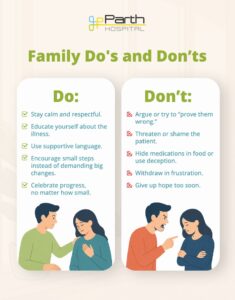
Do:
- Stay calm and respectful.
- Educate yourself about the illness.
- Use supportive language.
- Encourage small steps instead of demanding big changes.
- Celebrate progress, no matter how small.
Don’t:
- Argue or try to “prove them wrong.”
- Threaten or shame the patient.
- Hide medications in food or use deception.
- Withdraw in frustration.
- Give up hope too soon.
These principles help families maintain balance while waiting for patients to accept treatment.
A Real-Life Example
Meera (name changed), a 34-year-old woman with bipolar disorder, refused treatment after a previous hospitalization left her feeling humiliated. Her family approached us exhausted and hopeless. Through family meetings, they learned to listen differently, stop pressuring her, and validate her fears. Over time, Meera agreed to attend therapy sessions “just to talk.” That step led to medication, and eventually, remission. Her story shows that patience and empathy can turn resistance into recovery.
Conclusion
Supporting a resistant patient is one of the hardest challenges families face. But resistance is not refusal forever—it is a symptom, a fear, or a defense. At Parth Hospital Ahmedabad, we teach families to replace confrontation with collaboration, and frustration with empathy. With the right strategies, even the most resistant patients can find their way toward healing.
The message is simple: resistance is not the end of the story – it is often the first chapter of recovery.