




- Home
- >
- Schizophrenia
A Chronic Mental Disorder
Schizophrenia is a severe mental disorder that affects how a person thinks, feels, and behaves. People with schizophrenia may seem like they have lost touch with reality, which can be distressing for them and their families. It is a chronic condition requiring lifelong treatment.
What is schizophrenia exactly? And what are the types?

Delusions - Strongly held false beliefs not based in reality, despite evidence to the contrary
Hallucinations - Seeing, hearing, or sensing things that don't exist, most commonly hearing voices
Disorganized Thinking - Evident from disorganized speech, jumping between unrelated topics
Abnormal Motor Behavior - Unpredictable agitation, unusual postures, or complete lack of response
Negative Symptoms - Reduced emotional expression, lack of motivation, social withdrawa
Cognitive Impairment - Difficulty with attention, memory, and executive functioning
Explore schizophrenia through easy visuals that explain symptoms, causes, diagnosis, and treatment. This guide helps you understand early warning signs, support options, and pathways to long-term recovery and care.
Understanding the Condition

- Delusions - fixed false beliefs (persecution, grandiosity, reference)
- Hallucinations - perceiving things that aren't present, especially auditory
- Disorganized thinking and speech - incoherent or tangential communication
- Grossly disorganized or catatonic behavior
- Thought disorders - racing thoughts or thought blocking
- Paranoia and suspiciousness of others
- Unusual or bizarre behavior patterns
- Difficulty distinguishing reality from imagination
Exploring Related Conditions
Flat Affect - Reduced Emotional Expression
Alogia - Poverty of Speech, Brief Replies
Avolition - Lack of Motivation to Complete Tasks
Social Wthdrawal - Isolation From Others
Anhedonia - Inability to Feel Pleasure
Apathy - Lack of Interest or Concern
Emotional Flatness - Limited Emotional Range
Reduced Speech - Speaking Very Little
Neglect of Self-Care - Poor Hygiene and Appearance
Negative symptoms are often severe, and many people find these more disabling than positive symptoms as they significantly impact daily functioning and quality of life.
Impaired Executive Functioning - Difficulty with planning, organizing, initiating tasks, abstract thinking, and decision-making.
Attention Deficits - Trouble focusing, maintaining attention, easily distracted, difficulty processing information.
Memory Impairment - Working memory deficits affecting immediate recall and daily functioning.
Paranoid Schizophrenia
The most common type of schizophrenia, characterized primarily by delusions and auditory hallucinations. People may believe others are plotting against them or that they have special powers or importance. Despite these symptoms, thinking and emotional expression may remain relatively intact compared to other types.
WHAT CAN HAPPEN: Individuals may be highly suspicious, fearful, and anxious. They may withdraw from social interactions and become isolated. Without treatment, paranoid thoughts can lead to aggressive behavior if the person feels threatened.


Disorganized Schizophrenia (Hebephrenic)
This condition is characterized by severe disorganization in thinking, speech, and behavior. A person may speak in an incoherent or confusing way that is hard to follow and show disorganized actions that make daily tasks and self-care very difficult. Emotional responses may also be flat or inappropriate, such as laughing at sad news, which can make communication and understanding harder.
Because of these challenges, daily functioning is often seriously affected. People may withdraw from others, struggle to maintain relationships, and find it hard to manage everyday responsibilities without support.
Catatonic Schizophrenia
Catatonic schizophrenia is a condition marked by extreme changes in movement and unusual physical behaviors. A person may become very still and unresponsive (stupor), show repetitive or purposeless movements (stereotypy), become overly active and restless (agitation), hold strange or fixed body positions (posturing), or show unusual speech patterns like repeating words or not speaking much.
These symptoms can shift between very low movement and excessive activity. Because catatonia can be serious and sometimes life-threatening, it needs quick medical attention and proper treatment to keep the person safe and support recovery.


Undifferentiated Schizophrenia
Symptoms meet the general criteria for schizophrenia but don’t clearly fit into paranoid, disorganized, or catatonic types. May show a mix of symptoms from different categories. Patients may experience hallucinations, delusions, disorganized speech, and negative symptoms simultaneously without one category dominating. This diagnosis is used when the clinical picture is complex or changes over time, making it difficult to classify into a specific subtype. Treatment follows standard schizophrenia protocols with antipsychotics and psychosocial interventions tailored to the predominant symptoms.
Residual Schizophrenia
History of at least one psychotic episode, but currently shows only negative symptoms or mild positive symptoms. The person is in a recovery or stable phase but still experiencing some effects of the illness. While active hallucinations and delusions have subsided, individuals may struggle with motivation, social withdrawal, flat affect, and cognitive difficulties. Some attenuated positive symptoms like odd beliefs or unusual perceptual experiences may persist. This phase requires ongoing treatment, including maintenance medication to prevent relapse, psychosocial rehabilitation, vocational support, and family education. With proper management, many individuals can maintain stability and improve their functioning over time.

Diagnosis involves psychiatric evaluation and symptom assessment. Medical tests exclude other conditions. Professionals use DSM-5 criteria to confirm schizophrenia and plan treatment.

Antipsychotics treat schizophrenia’s positive/negative symptoms. Typical and atypical types used. Early cases respond well. Benzodiazepines aid agitation.
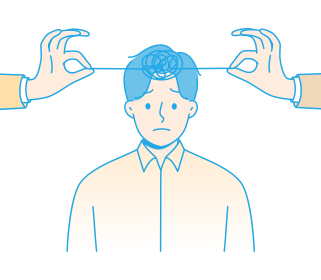
Moderate to severe cases, or chronic or treatment-resistant cases, may require ECT (Electroconvulsive Therapy) for treatment.
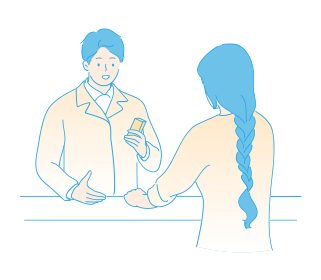
Psychoeducation of the patient post-treatment and psychoeducation of the family is pivotal in order to avoid discontinuation or relapse.

Long-acting injections are very helpful in patients with compliance issues or patients experiencing side-effects with oral medicines.
Explore schizophrenia through easy visuals that explain symptoms, causes, diagnosis, and treatment. This guide helps you understand early warning signs, support options, and pathways to long-term recovery and care.