




Introduction
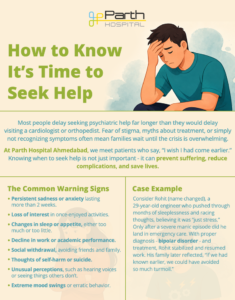
Most people delay seeking psychiatric help far longer than they would delay visiting a cardiologist or orthopedist. Fear of stigma, myths about treatment, or simply not recognizing symptoms often mean families wait until the crisis is overwhelming. At Parth Hospital Ahmedabad, we meet patients who say, “I wish I had come earlier.” Knowing when to seek help is not just important—it can prevent suffering, reduce complications, and save lives.
The Common Warning Signs
Mental health conditions often build up gradually, making it hard to recognize when professional help is needed. But certain patterns of thought, behavior, and function are clear signals:
- Persistent sadness or anxiety lasting more than 2 weeks.
- Loss of interest in once-enjoyed activities.
- Changes in sleep or appetite, either too much or too little.
- Decline in work or academic performance.
- Social withdrawal, avoiding friends and family.
- Thoughts of self-harm or suicide.
- Unusual perceptions, such as hearing voices or seeing things others don’t.
- Extreme mood swings or erratic behavior.
These are not signs of weakness—they are medical warning signs that the brain needs support.
Case Example
Consider Rohit (name changed), a 29-year-old engineer who pushed through months of sleeplessness and racing thoughts, believing it was “just stress.” Only after a severe manic episode did he land in emergency care. With proper diagnosis—bipolar disorder—and treatment, Rohit stabilized and resumed work. His family later reflected, “If we had known earlier, we could have avoided so much turmoil.”
Why People Delay Seeking Help
| Barrier | The Reality |
|---|---|
| Stigma | Psychiatric illness is as real as diabetes or asthma. |
| Myths about treatment | Modern psychiatry is safe, scientific, and compassionate. |
| Fear of being labeled “crazy” | We focus on recovery, not labels. |
| Belief it will go away on its own | Some mild issues do, but most persist or worsen without help. |
| Family denial | Early recognition prevents crisis; ignoring symptoms delays healing. |
Understanding these barriers helps families move from fear to action.
The Benefits of Early Intervention
Seeking help early has clear advantages:
- Faster recovery: Symptoms resolve more quickly.
- Lower relapse risk: Timely treatment prevents repeated episodes.
- Preserved relationships and work: Intervention protects careers and families.
- Better long-term prognosis: Early treatment reduces chronicity and disability.
- Reduced need for hospitalization: Problems are addressed before crisis escalates.
In short: early care saves time, money, and emotional energy.
When to Seek Help Immediately
Some situations should never wait:
- Active suicidal thoughts or plans.
- Violent or aggressive behavior risking safety.
- Severe withdrawal from food, water, or interaction.
- Psychotic symptoms like delusions or hallucinations.
- Sudden drastic personality changes.
In such cases, visiting the emergency psychiatry service at Parth Hospital or calling for immediate support can be life-saving.
The Role of Families
Often, patients themselves don’t realize they need help. Families are the first to notice changes: withdrawn behavior, poor hygiene, strange beliefs, or disorganized speech. We encourage families to document patterns, avoid confrontation, and bring observations gently but firmly to a consultation. Families can be the bridge between silent suffering and healing.
How Parth Hospital Helps
At Parth Hospital Ahmedabad, we make the first step easier by offering:
- Comprehensive assessments that combine clinical interviews, investigations, and family input.
- 24/7 emergency psychiatry services for crisis situations.
- Non-judgmental environment where patients are treated with dignity.
- Therapies and treatments tailored to each patient’s needs.
- Family education programs to empower loved ones.
Our message is simple: if you are wondering whether it’s time to seek help, it probably already is.
Frequently Asked Questions
Do I need a referral to see a psychiatrist?
No. You can directly book an appointment at Parth Hospital.
What if my symptoms are “not serious enough”?
If they interfere with daily life, they are serious enough to deserve attention.
Can I try counseling first?
Yes. Many conditions respond to therapy alone, but psychiatrists can guide whether medication is needed.
Will I be admitted to hospital automatically?
No. Admission is only for severe crises. Most patients are treated outpatient.
Conclusion
Recognizing when to seek psychiatric help is a critical step toward healing. Delays can turn manageable issues into emergencies, while timely care can restore life to normalcy. At Parth Hospital Ahmedabad, we reassure patients and families that asking for help is not weakness—it is courage.
The message is clear: don’t wait for crisis. If you or your loved one are struggling, reach out early. Help is available, recovery is possible, and you are not alone.