



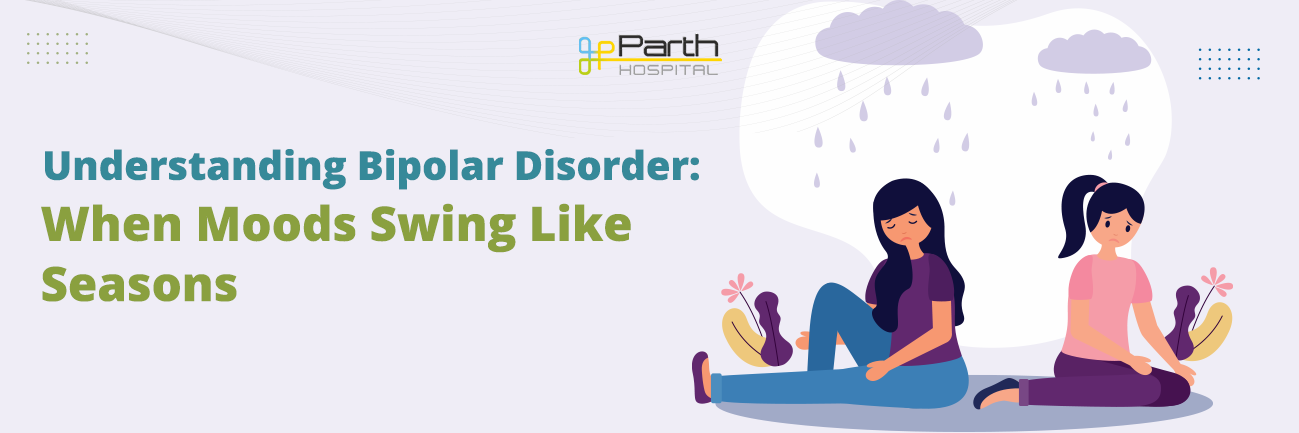
When Life Feels Like a Broken Pattern
Kavya’s mother observed her daughter’s life unravel in a baffling pattern. For three months, Kavya hardly left her room, reporting sick to work, skipping family events. Then abruptly—she’d be awake at 4 AM rearranging furniture, phoning relatives with ambitious business schemes, charging credit cards for items she didn’t need.
“We were tiptoeing around,” her mother describes. “At times she was normal. Occasionally very, very happy. Then suddenly I was very sad. We weren’t sure if this was really happening.”
If this seems familiar—you’re not alone. Bipolar disorder touches millions of Indian families.
What Are Bipolar Cycles?
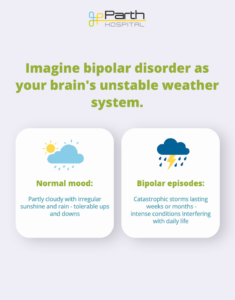
Imagine bipolar disorder as your brain’s unstable weather system.
- Normal mood: Partly cloudy with irregular sunshine and rain—tolerable ups and downs
- Bipolar episodes: Catastrophic storms lasting weeks or months—intense conditions interfering with daily life
The Three Mood States
1️⃣ Depression: The Deep Freeze
| Physical Signs | Emotional Signs | What Family Sees |
|---|---|---|
| Sleeping 12+ hours | Feeling hopeless | Avoiding everyone |
| No energy for essentials | Can’t enjoy pleasures | Missing work/college |
| Eating too little or too much | Intense guilt | Neglecting self-care |
| Moving very slowly | Worthlessness | Complete isolation |
Kavya’s depression: “I felt like living underwater. All tasks took immense effort—even brushing teeth seemed impossible.”
2️⃣ Mania: The Wildfire
| Physical Signs | Emotional Signs | What Family Sees |
|---|---|---|
| Sleeping 2-3 hours | Feeling invincible | Talking non-stop |
| Boundless energy | Extremely confident | Impulsive decisions |
| Racing thoughts | Irritable when questioned | Spending recklessly |
| Feeling “wired” | Grandiose plans | Risky behavior |
Kavya’s mania: “I felt I could accomplish anything. I’d initiate five ventures, stay up scheming businesses that would ‘change everything.’ In retrospect, it was exhausting to be around.”
3️⃣ Hypomania: The Deceptive “Good Mood”
| What Family Thinks | Reality |
|---|---|
| “Finally feeling better!” | Actually heading toward full mania |
| “This is the true her!” | Still part of the disease |
| “Treatment is successful!” | Episode just starting |
| “She doesn’t require assistance yet” | This is when intervention helps most |
Types of Bipolar Disorder
| Type | Pattern | What Indian Families Experience |
|---|---|---|
| Bipolar I | Full mania + depression (3-6 months each) | Dramatic mood swings, hospitalization usually required |
| Bipolar II | Hypomania + depression (prolonged depression) | More depression, “good phases” appear normal |
| Rapid Cycling | 4+ episodes yearly | Exhausting unpredictability—can’t plan anything |
| Mixed Episodes | Depression + mania simultaneously | Most dangerous, highest suicide risk |
Kavya’s Year: The Calendar View
January-March: Severe depression (couldn’t work, stayed in bed) April: Quick mood elevation (family relieved) May-June: Full mania (resigned from job, spent ₹1.5 lakhs, didn’t sleep) July: Crashed into depression August-October:Gradual depression (functioning but struggling) November: Hypomania (productive, creative) December: Stable period (finally on medication)
Patterns observed:
- Spring triggers mania, winter triggers depression
- Stress events precede mood switches
- Sleep disturbance signals imminent episode
- Medication stop = episodes recur
What Causes These Cycles?
| Trigger | Indian Context Examples | Why It Matters |
|---|---|---|
| Sleep disturbance | Festival late nights, exam all-nighters | Disrupts brain chemistry |
| Extreme stress | Job loss, marriage tension, family problems | Overwhelms brain with stress hormones |
| Seasonal changes | Monsoon rains, winter gloom | Interferes with brain’s natural rhythms |
| Medication problems | Missing doses while traveling, quitting when “feeling better” | Makes mood completely unpredictable |
The Domino Effect
TRIGGER (wedding stress, exam pressure)
↓
Sleep pattern disrupted
↓
Brain chemistry imbalance
↓
Early warning signs appear
↓
Full episode develops
↓
Life consequences (job loss, relationship issues)
Breaking the chain: Intervene early at any time to stop full episodes.
Early Warning Signs: Your Family’s Alert System
Kavya’s warning signs:
| Heading Toward Depression | Heading Toward Mania |
|---|---|
| Sleeping 10+ hours | Sleeping < 5 hours |
| Canceling plans with friends | Excessive social planning |
| “I’m tired” becomes frequent | “I have so many ideas!” excitement |
| Slower speech and movement | Rapid, pressured speech |
| Pessimistic about future | Unrealistic optimistic plans |
The 3-2-1 Warning System
3 days of warning signs: Increase monitoring and support 2 warning signs: Call treatment team at once 1 warning sign:Initiate crisis prevention plan.
Treatment Foundation
Consider treatment as building a house in storm country:
Foundation (Medication):
- Mood stabilizers (lithium, valproate)
- Prevents extreme episodes
- Must be regular to be effective
Walls (Therapy):
- Cognitive Behavioral Therapy
- Family-oriented therapy
- Teaches adaptation to mood swings
Roof (Lifestyle):
- Strict sleep schedule (10 PM-6 AM, no variation)
- Stress management
- Daily routine and structure
Storm Windows (Family Support):
- Early warning identification
- Crisis intervention training
- Emergency readiness
How Mood Stabilizers Work
| Untreated Brain | Treated Brain |
|---|---|
| Extreme mania 📈📈📈 | Manageable highs ⬆️ |
| Severe depression ❄️❄️❄️ | Manageable lows ⬇️ |
| Unpredictable chaos | Predictable, livable range |
Hope for Indian Families
With proper treatment:
- Episodes predictable, not a surprise
- Symptoms manageable, not overwhelming
- Recovery quicker, not so long
- Life stable, not out of control
Rajesh’s success (35, software engineer):
Before: Lost 3 jobs in 2 years due to mood episodes After 2 years: Same company 4 years, double promotions, mood tracking app, takes meds on time
His daily routine:
- 6:00 AM: Wake up, medication, mood check
- 7:00 AM: Exercise (mood regulation)
- 10:00 PM: Regular bedtime (NO exceptions—even Diwali!)
What Recovery Really Means
Not: Never having mood changes again But: Learning to identify patterns, cope with symptoms, create meaningful life
Kavya, 5 years later:
“Bipolar disorder was a plot twist, not the end of my story. I have a career, relationships, goals. The secret was learning that bipolar is something I have, not something I am.
To families beginning this journey—it gets better. You’ll work with the condition, not against it.”
📞 If you recognize your family’s story, reach out to Parth Hospital Ahmedabad for expert bipolar disorder assessment and treatment.
Where every cycle is understood, and every family finds hope.
⚠️ MEDICAL DISCLAIMER: This content is for educational purposes only and does not constitute medical advice. Bipolar disorder is a serious medical condition requiring professional diagnosis and treatment. If you or someone you know is experiencing mood episodes, suicidal thoughts, or psychiatric crisis, seek immediate professional help. Contact KIRAN Mental Health Helpline: 1800-599-0019 (24/7) or visit nearest emergency room. Treatment outcomes vary by individual. Always consult qualified mental health professionals for personalized medical advice.